Monday, September 3, 2018

The Casual Naturalist: The artist's books of Rebecca Chamlee


The Casual Naturalist: The artist's books of Rebecca Chamlee

July 6, 2018­ – September 28, 2018

opening reception: Saturday, July 14, 2018, 2:00 – 4:30 pm

artist talks: July 14, 2018, 3:00 pm and Sept. 8, 2018, 2:00 pm

LA County Arboretum & Botanic Garden Library

Rebecca Chamlee’s work examines the intersection of her artistic and scientific interests by collecting and cataloging the natural world around her. She is motivated to record, interpret and celebrate nature.

The exhibition will include letterpress printed, hand-bound artist’s book editions and detailed letterpress prints of native plant and animal specimens. In addition, process materials such as project journals, printing tests, book binding dummies and research notes will be on display alongside the final work.

pieintheskypress.com

Arboretum Library
LA County Arboretum & Botanic Gardens
301 North Baldwin Avenue, Arcadia CA 91007

626.821.3213 | arboretum.org/learn/library/

Thursday, February 22, 2018

Steamroller and lasers

Otis College of Art and Design had our semi-annual Steamroller Printmaking Festival yesterday. My Intro to Letterpress students carved figures out of MDF that will become an exquisite corpse.

Our Technical Services Department hosted the event and offered free wood, carving workshops and the use of carving tools. They also offered laser printing and the CNC router as an alternative to carving images. It made for a broad variety of approaches in making relief plates for printing.

I opted to go with laser to see how some of my oak tree images would look. I made them as big as would print in my Vandercook Universal III, 18 x 24 inches. The prints I made on the letterpress are much more refined that the one printed by the steamroller. Imagine that!


The steamroller ready for action


My laser cut oak tree block


Cut with the CNC router


Laser cut image by Josue


Muslin was very popular to print on during the steamroller festival. 
It has the advantage that it doesn't rip.


My Intro to Letterpress class figure prints. 
We lined them all up and printed them on one long sheet of paper. 


The tree plate in the Vandercook


A pretty nice print.

Friday, February 9, 2018

New prints

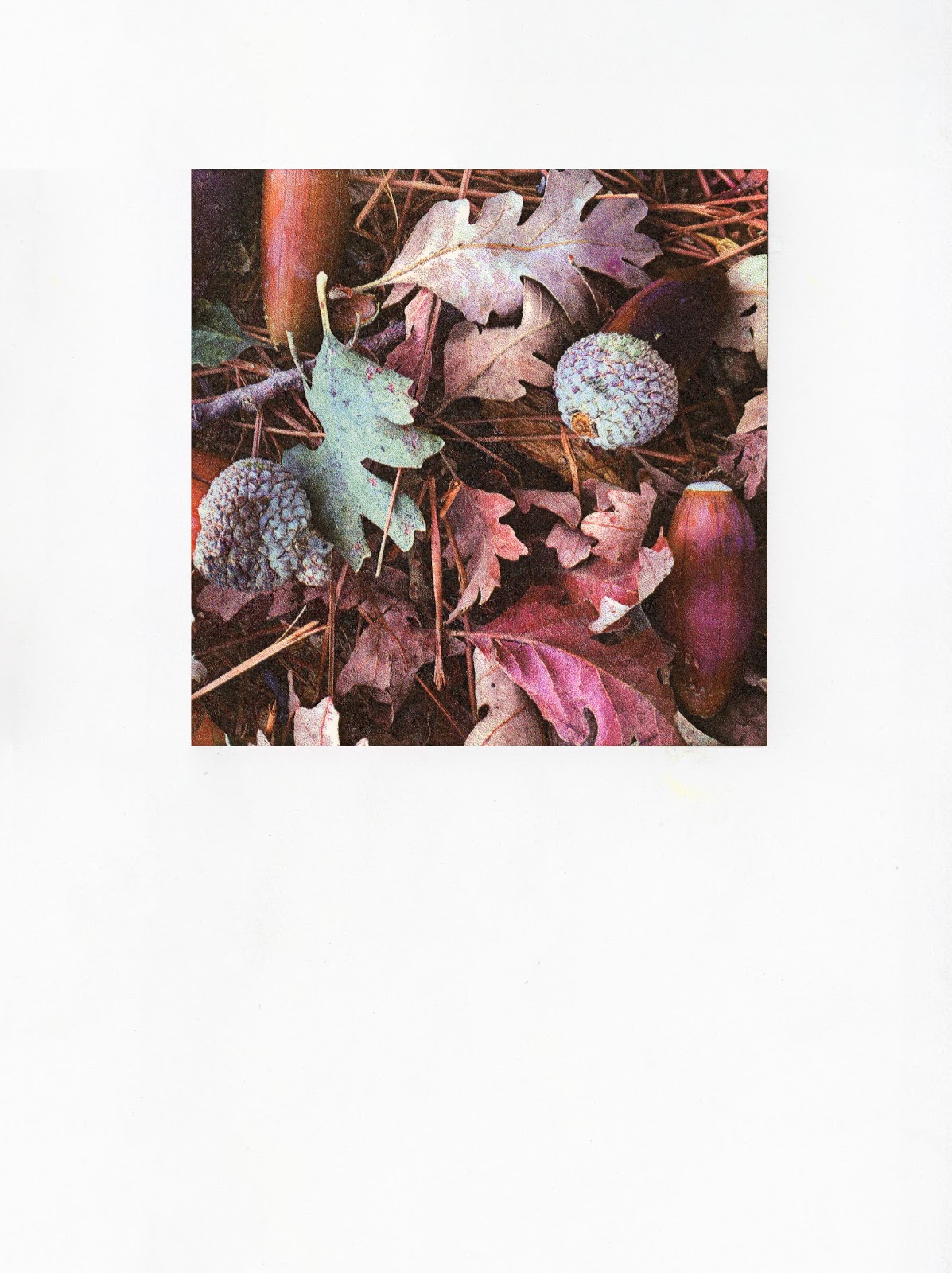
With a new book comes new prints. The process I've been developing over the last ten years to reproduce letterpress printed continuous tone prints of flora and fauna has been perfected further for the new book. The images were captured during my walks through the local woodlands near my house. Sometimes it's a good idea to look down.


One-of-a-kind books


I've been testing various ways of contacting printing leaves on paper for my upcoming artist's book. It's been a delight to make one-of-a-kind books with all my tests. Since my projects typically take a couple of years to complete, the spontaneous making of these books has been nothing but fun. And they make great gifts!


The cover for my upcoming book

I discovered the delights of contact steamed printing with leaves and other plant materials when I took a workshop with Leslie Marsh this fall through the San Diego Book Arts group.

I took this workshop specifically to learn Leslie's methods to compliment my burgeoning interest in nature printing. Although I have been making letterpress prints for some time of botanical specimens I wanted to print directly from plant material.

The new book I'm working on is about a particular ancient Valley oak tree I visit on my daily walks on the trails near my home in Simi Valley, CA. There is a companion volume planned about other similar trees in the surrounding area.

I collected fallen leaves to print the cover and some interior pages using a process sometimes called "eco-printing" which is commonly done on protein-based fabric. I was interested in using cellulose fiber (paper) for my project.


fallen leaves  


The leaves are soaked in water 


 the leaves are placed damp paper and rolled on pipe and tied


I use an electric turkey roaster to cook the bundles


finished prints are hung on a line in my backyard


the results 


Tuesday, July 11, 2017

“Common Objects of the Seashore” prints

Letterpress specimen images of California native sea life, photographed in the tide pools of Cabrillo Beach, California. The suite of prints accompanies the deluxe edition of "At Low Water". Printed four-color in tight registration with photo polymer plates. 

9 x 12 inches, printed on 250 gsm Canson Edition paper.

$75.00 each. 

"Common Object of the Sea Shore", set of all eight prints enclosed in a handmade Cave paper chamise $400.00.


New Deluxe copies of “at low water” available

A limited number of numbered books with vellum spines; “Common Objects of the Seashore”, the suite of eight prints in a handmade Cave paper chemise, and a Neobernaya spadicea shell enclosed in a hinged box are now available. 64 pages, Book 5 x 8 x 1 inches, box 9.25 x 12.25 x 2 inches. $1200.00


Tuesday, March 21, 2017

Binding Dummies - Sewn board style

The search for the perfect binding for this book continued with experiments with Gary Frost's sewn board binding. I call it a sewn board style binding because with the text block to be a drum leaf the cover folio was not to be sewn, but glued.

From Karen Hanmer's handout at the 2013 Guild of Book Workers Standards of Excellence seminar:


The sewn boards binding is Gary Frost’s elegant, modern adaptation of an ancient method of board attachment. Stiffened outer signatures sewn along with the text block function as the book’s boards.

The drum leaf binding, developed by Tim Ely, has features in common with preexisting Eastern and Western binding structures. This adhesive binding is a perfect structure for printmakers, photographers, or anyone who desires to present visual narratives with no sewing thread to interrupt the flow of imagery. Because a drum leaf book is not laid out in signatures but made of single-sided folios, the complexities of imposition are not encountered when laying out text. Like the sewn boards, the drum leaf can also utilize stiffened outer folios as the book’s boards.

Both structures can be dressed up or down with a variety of spine treatments, board-covering materials, and edge decoration techniques. Both books open flat.  


I tried a goat vellum spine, lined with a bristol spine stiffener.

I really didn't like the sight of the bristol inside the spine.

Functionally, it worked every bit as well as the dos rapporte but a lot less work involved, or so I thought.

The sewn board style compared to the dos rapporte. I favored the reduction of bulk at the spine with the sewn board version.

Binding dummies - Ben Elbel's dos Rapporte

I settled on a drum leaf text block so that I could slip the translucent overlay containing the poem inside the foredge between pages. 

That left a lot of possibilities open for the binding of the book. The first think I wanted to try was a dos rapporte binding that I learned in a workshop. the dos rapporté binding is a spine construction developed by Benjamin Elbel that provides books with a great opening and a sleek contemporary character. 

The spine construction. Because it folds back on itself the spine is tricky.


the half of the end sheet folio that is closest to the cover is trimmed and the spine is lined with Jaconnet.


Alas, as lovely as this binding worked and looked, I decided that it would be too much work to edition.


Habitat image test

I wanted to include closeup, dreamy images of the marine habitat that could be overlaid with a poem, told from the viewpoint of the child in the moment of discovery, to run through the book on translucent leaves.

These images were first tested using bitmapped plates with a final stochastic dot plate for value. The final images were printed with 3 custom colors using the stochastic dot on all 3 plates, printed on natural thick kozo paper.


Test on MacGregor abaca paper with 2-step gold ink and a gampi overlay

Also tested on handmade Katie MacGregor paper, no gold with kozo overlay

Comparison of habitat spread and specimen image

Printing the light blue plate of the mussel image


Next, the brown and then dark blue.